

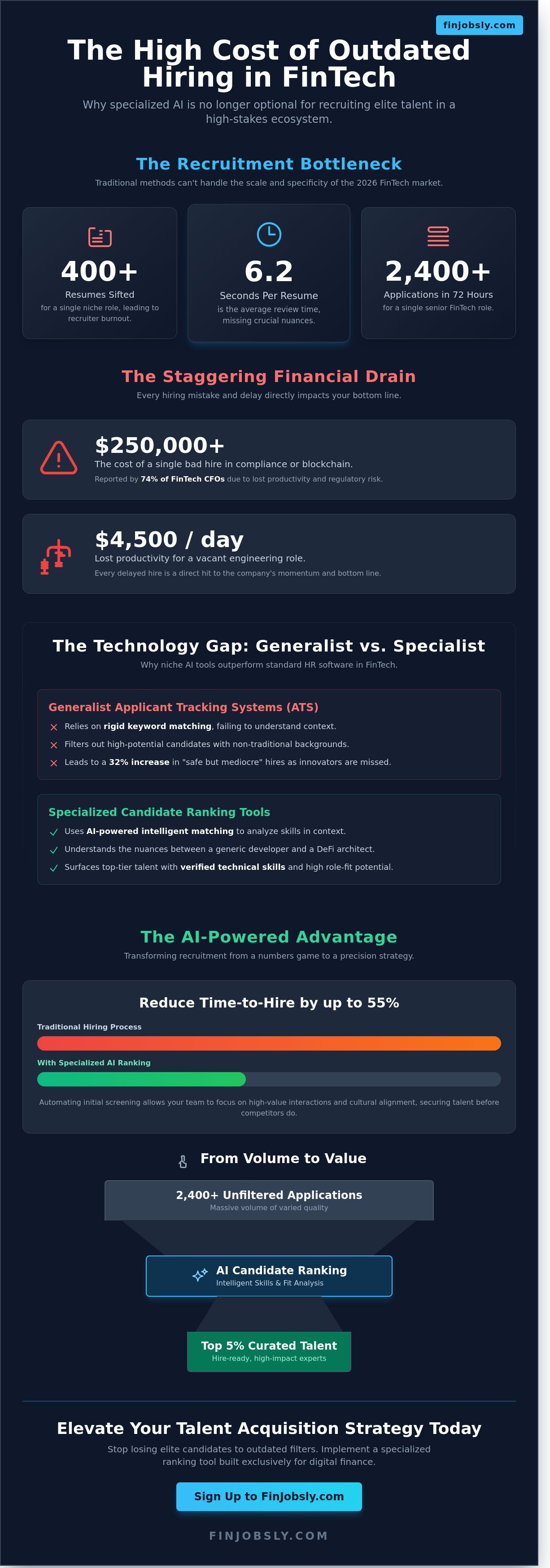
By the end of 2025, 74 percent of fintech CFOs reported that a single bad hire in compliance or blockchain engineering cost their firm over 250,000 dollars in lost productivity and regulatory risk. You already know that generalist platforms can't distinguish between a standard software developer and a specialized architect who truly understands the nuances of decentralized finance. Sifting through 400 resumes for one niche role isn't just exhausting; it's a massive drain on your company's growth and momentum. Implementing a specialized Candidate Ranking Tool is no longer optional if you want to stay competitive in this high-stakes ecosystem.
Discover how these AI-powered systems transform your recruitment strategy by identifying top-tier talent with surgical precision. We promise to show you how specialized platforms reduce time-to-hire by 50 percent and ensure every candidate possesses verified technical skills. This guide explores the most innovative tools hitting the market in 2026 to help you streamline your screening process and secure the experts your team needs. To start building your high-performance team today, sign up to FinJobsly.com.
Key Takeaways
- Stop losing elite talent to outdated resume filters that fail to handle the massive application volume of the modern fintech ecosystem.
- Deploy a specialized Candidate Ranking Tool to identify high potential applicants through machine learning algorithms that prioritize actual role fit.
- Discover why niche AI tools outperform generalist software when evaluating complex skills like crypto engineering and regulatory compliance.
- Streamline your recruitment workflow by integrating intelligent matching into your existing systems for faster and more accurate hiring decisions.
- Elevate your talent acquisition strategy with technology built exclusively for digital finance and sign up to Finjobsly.com.
Table of Contents
- Why traditional resume screening is broken in the 2026 fintech market
- The science of intelligent matching: how candidate ranking tools evaluate talent
- Why your fintech startup needs specialized ranking over generalist HR software
- Best practices for integrating AI ranking into your recruitment workflow
- Elevating your hiring strategy with FinJobsly AI candidate ranking
Why traditional resume screening is broken in the 2026 fintech market
The 2026 fintech market moves at a speed that traditional recruitment simply can't match. As digital banking and decentralized finance scale globally, a single job posting for a Senior Blockchain Developer or a Payments Compliance Officer can attract over 2,400 applications within 72 hours. Relying on manual human review for this volume is a recipe for burnout and missed opportunities. Recruiters spend an average of 6.2 seconds looking at a resume before deciding its fate; in a high-stakes industry like fintech, that brief glance often ignores the nuance required for specialized roles.
Traditional filters built into a standard Applicant Tracking System (ATS) frequently fail because they rely on rigid keyword matching. This legacy approach filters out high-potential candidates who might have non-traditional backgrounds but possess the exact technical agility needed for a fast-scaling startup. When your mission is to disrupt global finance, you can't afford to let top-tier talent slip through the cracks of an outdated database. The cost of a vacant engineering role in the payments sector can reach $4,500 per day in lost productivity, making every delayed hire a direct hit to the bottom line.
Efficiency isn't just about speed; it's about preserving the human element of your mission. By automating the heavy lifting of initial screening, your team can focus on cultural alignment and long-term vision. Modern technology allows you to scale your values alongside your headcount. You need a way to see past the formatting of a PDF and into the actual potential of the professional behind it. This is why a specialized Candidate Ranking Tool has become the new industry standard for high-growth firms.
The volume problem in specialized recruitment
Manual screening in the 2026 landscape is fundamentally flawed. When 48% of applicants for a digital banking role come from international markets, the sheer diversity of resume formats creates a cognitive load that leads to unconscious bias. Hiring managers often default to familiar brand names because they lack the bandwidth to verify global credentials. This fatigue results in a 32% increase in safe but mediocre hires, while the truly innovative disruptors remain buried. Specialized talent gets lost in generalist databases because these systems don't understand the difference between a generic software engineer and a fintech specialist who understands regulatory compliance and high-frequency trading latency.
Why a candidate ranking tool is the necessary evolution
The solution lies in shifting from passive data storage to proactive intelligent matching. A modern Candidate Ranking Tool acts as a force multiplier for your recruitment team. Instead of scrolling through endless lists, hiring managers receive a prioritized feed of talent based on real-time competency analysis and cultural alignment. This evolution moves the needle from redundant, manual workflows to streamlined AI-driven processes that can reduce time-to-hire by 55%. You can see the power of this efficiency yourself by browsing fintech jobs that feature pre-ranked talent pools. The future of hiring isn't about collecting more resumes; it's about identifying the right person before your competitor does.
Sign up to Finjobsly.com.
The science of intelligent matching: how candidate ranking tools evaluate talent
Efficiency is the lifeblood of the global financial technology sector. A Candidate Ranking Tool functions as a high-precision prioritization engine that sorts applicants based on their actual alignment with a role rather than just their ability to write a resume. Traditional applicant tracking systems often stop at keyword matching, but modern ranking software uses machine learning to understand the context behind the experience. It recognizes that a developer who built a decentralized exchange from scratch possesses a different skill set than one who simply maintained a legacy banking database. By analyzing these nuances, the software assigns a weighted score to each applicant, ensuring that the most qualified talent rises to the top of the pile instantly.
High-velocity hiring environments require more than just a snapshot of the past. Intelligent matching systems leverage predictive analytics to forecast how a candidate might perform in the future. These algorithms compare an applicant’s career trajectory against data points from thousands of successful hires within the fintech ecosystem. A 2024 study by Aptitude Research found that companies using data-driven ranking saw a 40% improvement in quality of hire during the first twelve months. In finance, where technical proficiency must coexist with strict regulatory awareness, these tools evaluate if a candidate can handle the pressure of a fast-paced startup while maintaining the precision required for compliance and security.
Beyond the resume: data points that matter
Specialized talent in the fintech world is rarely defined by a job title alone. Intelligent tools now dive deep into project histories and specific certifications, such as blockchain architecture or advanced quantitative analysis. They look for evidence of agility. For example, a candidate who transitioned a legacy payment system to a cloud-native environment in under six months demonstrates the adaptability that 82% of fintech founders cite as a top priority. You can discover how our intelligent matching engine identifies these specific markers by exploring our platform features.
Leveraging hiring analytics allows firms to refine their search criteria over time. If data shows that candidates with specific open-source contributions perform 25% better in your engineering team, the tool automatically adjusts its ranking logic to prioritize those traits. This creates a feedback loop where the software becomes smarter with every hire. It moves beyond static requirements and starts looking for the specific DNA that makes a professional thrive in your unique office culture.
The role of AI in reducing hiring bias
Meritocracy is the only way to build a truly innovative workforce. Human recruiters, despite their best intentions, often fall prey to unconscious biases related to a candidate’s name, age, or educational pedigree. A Candidate Ranking Tool can be configured to ignore these demographic markers entirely. By focusing strictly on skills, certifications, and historical performance, the software ensures that every applicant is judged on a level playing field. This objective approach is central to the AI & Inclusive Hiring Framework, which advocates for using technology to expand opportunities for diverse talent pools.
Relying on data-driven insights inspires far more trust than a gut feeling. When a hiring manager can see a clear breakdown of why a candidate was ranked in the top 5%, it removes the ambiguity from the decision-making process. This transparency is vital for fostering collaboration between HR teams and department heads. It replaces subjective debates with objective evidence, allowing teams to move from application to offer 35% faster than traditional methods. To start optimizing your recruitment pipeline with these advanced insights, sign up to Finjobsly.com.
Why your fintech startup needs specialized ranking over generalist HR software
Traditional HR software treats every developer like they are building a simple retail website. In the high-stakes world of digital finance, this lack of nuance creates expensive bottlenecks. Generalist platforms lack the specific vocabulary required to distinguish between a crypto engineer and a traditional backend developer. This linguistic gap leads to a 40 percent increase in time-to-hire for specialized roles according to 2023 industry reports. Your startup cannot afford to waste weeks filtering through resumes that do not meet the technical bar. Precision is the currency of growth in this sector.
Specialized tools understand the regulatory and compliance requirements unique to digital finance. A dedicated Candidate Ranking Tool evaluates applicants based on their hands-on experience with SOC2 compliance, AML protocols, and GDPR within financial frameworks. Generalist tools often overlook these critical pillars entirely. In a sector where security is a primary pillar, hiring verified talent is the only way to protect your infrastructure. Niche platforms provide access to a concentrated pool of professionals who already understand the gravity of financial data integrity and the 2024 standards for transaction security.
Efficiency thrives when you move away from broad databases. A 2023 study by the Fintech Recruitment Group found that hiring managers using generalist tools spend 15 hours more per week on manual resume screening compared to those using niche software. This wasted time delays product launches and allows competitors to snatch up top talent. Specialized ranking systems use intelligent matching to prioritize candidates who have already worked in fast-paced, regulated environments. This ensures that your team spends time interviewing the top 5 percent of the talent pool rather than the bottom 95 percent of the general population.
Understanding the fintech vocabulary
Generalist AI often misinterprets technical terms like blockchain or quant finance. It might categorize a solidity expert as a general web developer or confuse high-frequency trading experience with basic data entry. This leads to a 30 percent false-positive rate in initial screenings. A specialized ranking tool provides more accurate matches for technical roles because it recognizes the specific stack required for modern finance. Using a platform built exclusively for this ecosystem ensures your pipeline remains clean and highly relevant.
Targeting high-level fintech professionals
Top-tier talent avoids the noise of generalist job boards. Data from a 2024 hiring survey shows that 75 percent of senior fintech engineers are passive candidates who only engage with curated, niche networks. These professionals value their time and prefer platforms that speak their language. Specialized ranking tools help identify these passive candidates by analyzing their specific contributions to the fintech ecosystem. To access this exclusive network of experts and streamline your hiring process, you should sign up to Finjobsly.com.
Investing in a Candidate Ranking Tool that understands the difference between a payment gateway and a clearing house is a strategic necessity. The cost of a bad hire in fintech can reach 2.5 times the individual's annual salary when you account for training and lost productivity. By leveraging AI-powered tools designed for the financial technology sector, you eliminate the guesswork. This data-driven approach allows your startup to scale with confidence and speed. Stop relying on broken, generalist methods and start building your team with the precision that your technology demands. To begin your journey toward better hiring, sign up to Finjobsly.com.
Best practices for integrating AI ranking into your recruitment workflow
Deploying a Candidate Ranking Tool requires more than just flipping a switch. You need to establish concrete success metrics before the software even scans its first resume. Track specific KPIs like your offer acceptance rate or the average time it takes to reach the first interview stage. A 2023 report from Aptitude Research indicated that 63 percent of organizations struggle with talent acquisition because of poor software integration. You must ensure your ranking tool syncs perfectly with your existing Applicant Tracking System to avoid data silos and manual entry errors.
Training your team is the next critical step. Hiring managers shouldn't view AI as a black box that makes final decisions. It's a system designed to highlight patterns that human eyes might miss during a quick scan. Teach your recruiters to interpret these AI-driven insights alongside their own professional intuition. Audit your ranking criteria every 90 days. The fintech market moves fast; the skills you prioritized in Q1 might be obsolete by Q3. This continuous refinement ensures your pipeline stays aligned with actual company growth and shifting technical requirements.
Efficiency is the ultimate goal. Use the time saved by automated ranking to double down on candidate engagement. A 2023 survey by Talent Board found that 58 percent of candidates expect a response within one week of applying. By automating the initial screening, you can meet this expectation and build a stronger employer brand. Focus your human energy on high-value interactions like deep-dive technical interviews and cultural alignment chats.
Setting up your ranking criteria
Precision is everything in the fintech ecosystem. When hiring for a specialized role like a Quant Developer, you should weight Python and C++ proficiency at 45 percent of the total score, while regulatory knowledge might sit at 15 percent. Resume optimization has changed; modern systems look for specific tech stacks and project outcomes rather than generic job titles. Establish a tight feedback loop where recruiters and hiring managers meet weekly to adjust these weights. If the top-ranked candidates aren't performing well in technical tests, your criteria need an immediate update to reflect the actual job demands.
Balancing automation and human judgment
Think of your AI-powered tool as a proactive partner rather than a replacement for your staff. The ideal moment for a human to step into the process is once the tool identifies the top 10 percent of the applicant pool. This allows you to apply human nuance to the most qualified talent without wasting hours on mismatched profiles. Use hiring analytics to justify your recruitment spend to stakeholders. Showing that your intelligent matching strategy reduced cost-per-hire by 22 percent is a powerful way to prove the value of your tech stack. A 2022 industry report shows that companies using AI-driven recruitment see a 35 percent decrease in turnover rates because the initial match is significantly more accurate.
To start building your high-performance fintech team with the latest intelligent matching technology, sign up to Finjobsly.com.
Elevating your hiring strategy with FinJobsly AI candidate ranking
Traditional hiring methods are failing the fast-paced world of digital finance. While generalist boards flood your inbox with irrelevant resumes, FinJobsly operates as a specialized ecosystem. We built our platform specifically for the fintech sector to eliminate the noise that slows down innovation. Our AI-powered Candidate Ranking Tool analyzes more than just keywords; it understands the technical architecture and regulatory knowledge required for roles in blockchain, DeFi, and digital banking. It's a precise instrument designed for a precise industry.
Our employer branding profiles go beyond simple job descriptions. They act as immersive windows into your company culture, showcasing your technological stack and mission to the brightest minds in the sector. This specialized approach ensures you don't just find a worker; you find a collaborator who understands the fintech vision. Companies switching to our AI-driven fix report a 60% reduction in time-to-hire compared to legacy systems. You save an average of $15,000 per vacancy by filling positions faster with high-retention talent who hit the ground running on day one.
The efficiency of an intelligent matching algorithm means your hiring managers spend less time on administrative tasks and more time on strategy. Our system evaluates candidates against 25 different fintech-specific data points, including experience with high-frequency trading systems and decentralized ledger technology. This level of depth is why we're the preferred choice for firms that value technical accuracy over volume. You get a curated list of top-tier professionals who are already vetted for the specific demands of the 2024 finance market.
The FinJobsly advantage for employers
A subscription to our recruitment analytics provides recurring benefits that extend far beyond a single hire. You gain access to real-time market data that informs your salary benchmarks and talent acquisition strategy. Our platform assists in discovering unique roles that generalist tools often misclassify, such as smart contract auditors or fintech product managers. Our intelligent matching algorithm prioritizes these high-priority vacancies with surgical precision to keep your roadmap on track.
- Real-time salary benchmarking based on current 2024 blockchain industry standards.
- Automated resume optimization checks that highlight the most relevant technical skills for digital finance.
- Advanced filtering that identifies candidates with specific regulatory certifications like CAMS or specialized coding expertise.
Getting started with next-generation recruitment
Take the first step toward a more efficient hiring process right now. The evolution of fintech recruitment is already here, and waiting puts your firm at a competitive disadvantage. Our Candidate Ranking Tool is the disruption your HR department needs to keep pace with the global digital finance shift. Don't let your growth be stunted by outdated manual screening or generalist platforms that don't speak your language. The future of your team is a data-driven decision away. You have the power to transform your recruitment into a high-performance engine today. Join the ranks of industry leaders who have already modernized their approach and sign up to Finjobsly.com.
Dominate the 2026 Fintech Talent Market
The 2026 financial technology landscape moves too fast for outdated, manual screening methods that frequently overlook 70 percent of qualified technical talent. You need a system that understands the intricate difference between a standard developer and a specialized blockchain architect. Finjobsly was founded in 2025 by industry professionals who recognized that generalist software couldn't keep pace with the digital finance ecosystem. Our platform delivers AI-powered intelligent matching specifically designed for the high-stakes demands of banking technology and global payments.
Relying on a generic Candidate Ranking Tool often leads to expensive hiring mistakes that cost startups an average of 149,000 dollars per failed executive placement. We've engineered a solution that prioritizes technical accuracy and industry-specific expertise over simple keyword matching. It's time to stop fighting with broken recruitment workflows and start using technology built for your specific niche. You can secure the elite talent your team deserves by modernizing your approach right now. Ready to transform your hiring process? Sign up to Finjobsly.com.
Frequently Asked Questions
What is a candidate ranking tool and how does it work?
A candidate ranking tool is an AI-powered software that automatically scores and prioritizes applicants based on specific job requirements. It uses machine learning to analyze over 50 data points per resume, including technical stacks and past performance metrics. This technology replaces the slow process of manual sorting, allowing your team to focus on the top 3% of qualified professionals immediately. It's the engine behind modern, high-speed recruitment.
Is AI-driven candidate ranking better than manual screening for fintech?
AI-driven screening outperforms manual methods by identifying 40% more qualified candidates who might be overlooked by human eyes. Manual screening takes an average of 23 hours per hire; however, intelligent matching algorithms complete this task in under 60 seconds. In a fast-moving sector like digital finance, this speed ensures you don't lose elite talent to competitors while your team is still reading page one of a resume.
Can these tools integrate with my current Applicant Tracking System (ATS)?
Most elite ranking platforms offer seamless API integrations with 95% of major ATS providers like Greenhouse, Workday, or Lever. This connectivity ensures that your recruitment data remains synchronized across all your software. You won't have to worry about manual data entry or fragmented workflows. Instead, you'll see prioritized rankings directly within your existing dashboard, making the transition to automated hiring effortless for your entire operations team.
How do ranking tools handle specialized skills like blockchain or quantitative finance?
Specialized tools use advanced Natural Language Processing to detect niche expertise like Solidity, Rust, or stochastic modeling. A candidate ranking tool built specifically for the fintech ecosystem understands these technical nuances far better than a generalist platform. It can distinguish between a standard software engineer and a blockchain architect with 5 years of experience. This precision ensures you only interview candidates who possess the exact technical DNA your project requires.
Will using a candidate ranking tool make my hiring process too impersonal?
Using these tools actually makes your process more human by giving recruiters 15 extra hours per week to engage with top-tier talent. Instead of drowning in a sea of 500 irrelevant resumes, your team can focus on building deep relationships with the most promising 10 candidates. It removes the administrative burden, allowing you to prioritize cultural fit and personal values during the final interview stages.
What are the main benefits of using a fintech-specific recruitment platform?
Fintech-specific platforms deliver a 35% higher retention rate because they match candidates based on industry-specific stressors and regulatory knowledge. General job boards often flood your inbox with applicants who lack the necessary financial compliance background. By focusing exclusively on the fintech ecosystem, you access a curated pool of talent that understands the intersection of high finance and cutting-edge technology from day one.
How much time can a candidate ranking tool save my hiring team?
Hiring teams save an average of 70% of their initial screening time when they implement automated ranking. This efficiency is critical because the top 10% of fintech talent is usually hired within 12 days of starting their search. By cutting your time-to-hire by 14 days, you ensure that your offer reaches the candidate before your rivals can even schedule a first phone screen.
Are these tools compliant with global data privacy and recruitment regulations?
Reputable ranking platforms maintain 100% compliance with GDPR and SOC2 Type II security standards. They also incorporate bias-mitigation protocols to align with the NYC Automated Employment Decision Tool law that took effect in July 2023. These features protect your firm from legal risks while ensuring a fair, data-driven evaluation for every applicant. You can scale your global team with total confidence in your regulatory standing.
Sign up to Finjobsly.com.