
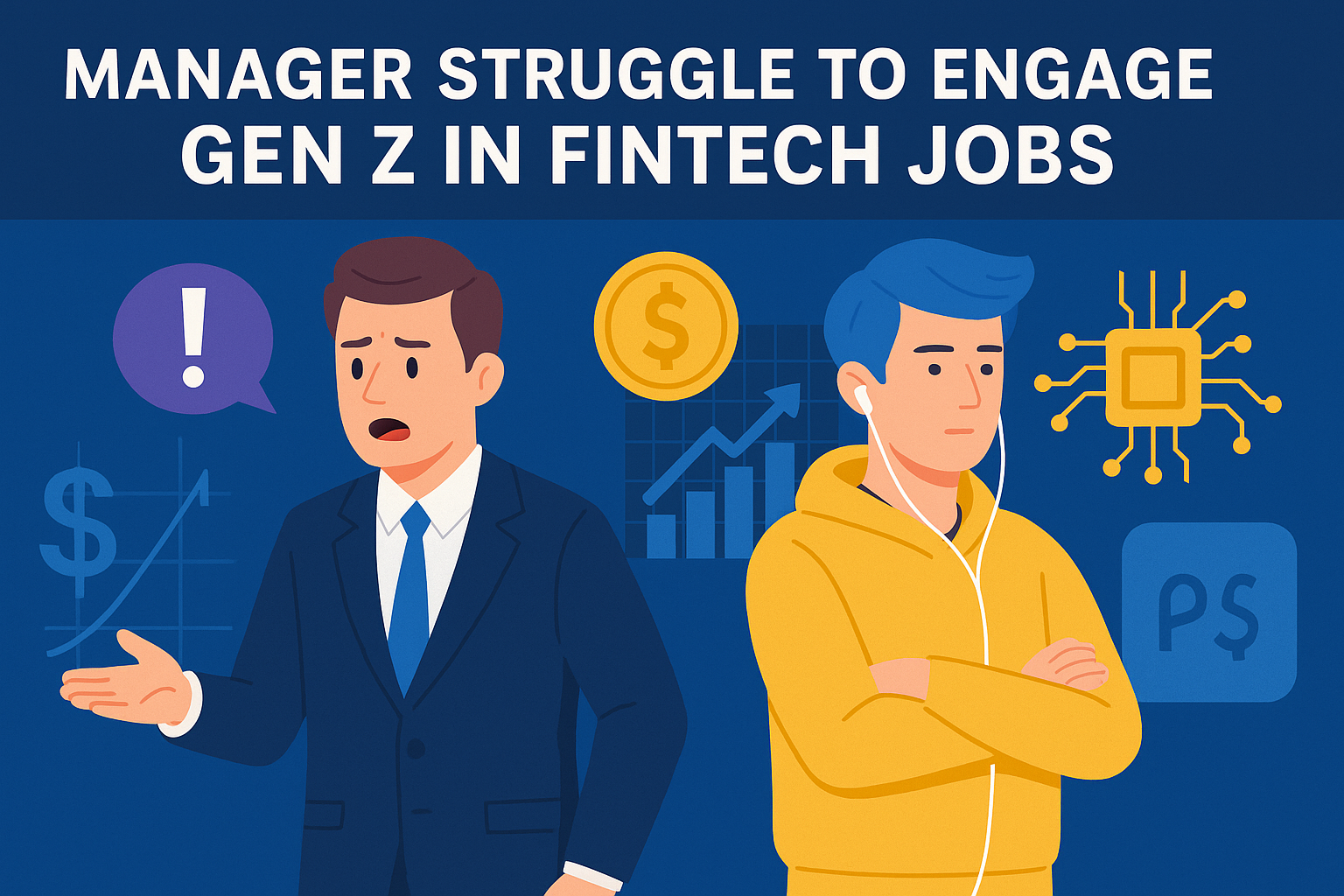
A new survey has sparked debate across the financial technology sector. According to a report published by HR News, 62% of managers say Gen Z employees are the hardest generation to engage at work. This finding raises key questions for employers and candidates competing for fintech jobs in 2025.
Fintech is one of the fastest-growing areas of financial services, attracting both experienced professionals and younger digital natives entering the workforce. But despite their technical fluency, many managers say Gen Z workers show lower levels of motivation and job satisfaction compared to previous generations. The disconnect is starting to influence how firms recruit, train, and retain staff—especially across high-growth areas such as jobs in payments, digital compliance, and financial product development.
Managers Raise Red Flags Over Motivation
The survey, which gathered views from business leaders across multiple industries, highlights a growing challenge: maintaining engagement among a generation raised in the era of remote work, constant connectivity, and short-form digital content. Fintech executives say these cultural shifts are reshaping expectations in the workplace.
“Fintech is built on innovation and collaboration, but many younger workers want faster feedback loops and a clearer sense of purpose,” said a senior HR manager at a London-based payments startup. “The problem isn’t skill—it’s alignment. When a 24-year-old developer feels disconnected from the mission, productivity drops fast.”
Employers say the situation has tangible business consequences. Disengaged staff tend to switch roles more frequently, and in an industry where time-to-hire is already short, turnover raises costs and delays product launches. This trend is forcing companies to re-evaluate their hiring practices and performance management systems.
Fintech Hiring Still Rising Despite Challenges
Despite the engagement gap, fintech hiring remains strong. Data from recruitment platforms like Finjobsly show steady month-on-month growth in listings for fintech jobs across Europe and North America. Roles in engineering, data science, sales, and compliance remain particularly competitive.
Startups are still raising capital to expand, while established players such as Stripe, Revolut, and Wise continue to recruit aggressively. Hiring is also accelerating in jobs in payments as global transaction volumes rise. The Bank for International Settlements recently reported that daily FX trading has hit $9.6 trillion, reflecting how deeply fintech infrastructure underpins global finance.
Yet behind the headline numbers, hiring managers admit it is becoming harder to find and retain engaged employees. Recruiters report that Gen Z applicants often seek rapid promotion, flexible schedules, and social purpose in their work—factors that traditional financial employers have been slower to provide.
Big Tech’s Entry Into Fintech Creates Opportunity
Adding another layer of complexity, big tech firms such as Amazon and Google are investing heavily in financial technology. Both companies have expanded their partnerships with payment providers, including PayPal and other digital wallet systems. Their expansion is expected to generate thousands of new fintech jobs worldwide, ranging from software engineering to regulatory compliance and customer experience roles.
Amazon’s focus on embedded finance for merchants and Google’s work on data-driven financial platforms are redefining the sector. These developments could also reshape the labor market, as fintech startups compete with tech giants for the same pool of skilled workers. Analysts say the influx of capital and talent will create opportunities for candidates who can bridge technology and financial regulation.
“When Amazon or Google moves into a market, they lift expectations,” said a recruitment consultant at Finjobsly. “That means companies need professionals who understand both the technical architecture of payments and the human side of compliance. Candidates with cross-disciplinary skills are in the strongest position.”
How Candidates Can Stand Out in a Changing Market
For job seekers, the Gen Z engagement debate offers both lessons and openings. Employers are no longer looking only for hard skills—they also value reliability, adaptability, and a clear sense of purpose. To stand out in a crowded field of fintech jobs, candidates should focus on three priorities: credibility, communication, and consistency.
Building credibility means showing measurable impact. Engineers should highlight how they reduced system latency or improved security. Sales professionals should quantify their revenue growth or client acquisition rates. Compliance officers should show how their work improved regulatory performance or audit outcomes.
Communication also plays a growing role. Candidates who express enthusiasm for financial innovation and demonstrate awareness of global market trends are far more appealing to hiring managers. Consistency—demonstrated through stable work history, personal projects, or volunteer initiatives—helps counter perceptions of disengagement that some employers associate with younger talent.
The Outlook for Fintech Jobs in 2025
Industry analysts predict fintech hiring will remain resilient through 2025. With continued venture investment and the expansion of payments and lending ecosystems, employers will need to balance automation with human expertise. The growing role of AI in fraud detection, risk management, and customer service will also create new categories of jobs in payments and digital operations.
However, the sector must also adapt culturally. The challenge for leadership is not only finding talent but engaging it. Gen Z professionals bring creativity, social awareness, and technological fluency—but they expect transparency, rapid development, and personal growth in return. Companies that meet those expectations will have an advantage in attracting the best talent.
The rise of Gen Z may not be “killing fintech jobs,” but it is transforming them. As fintech matures, the focus is shifting from hiring fast to hiring well—from simply filling seats to building teams that last. For candidates, the opportunity is clear: those who blend technical excellence with engagement and purpose will define the next decade of fintech innovation.