

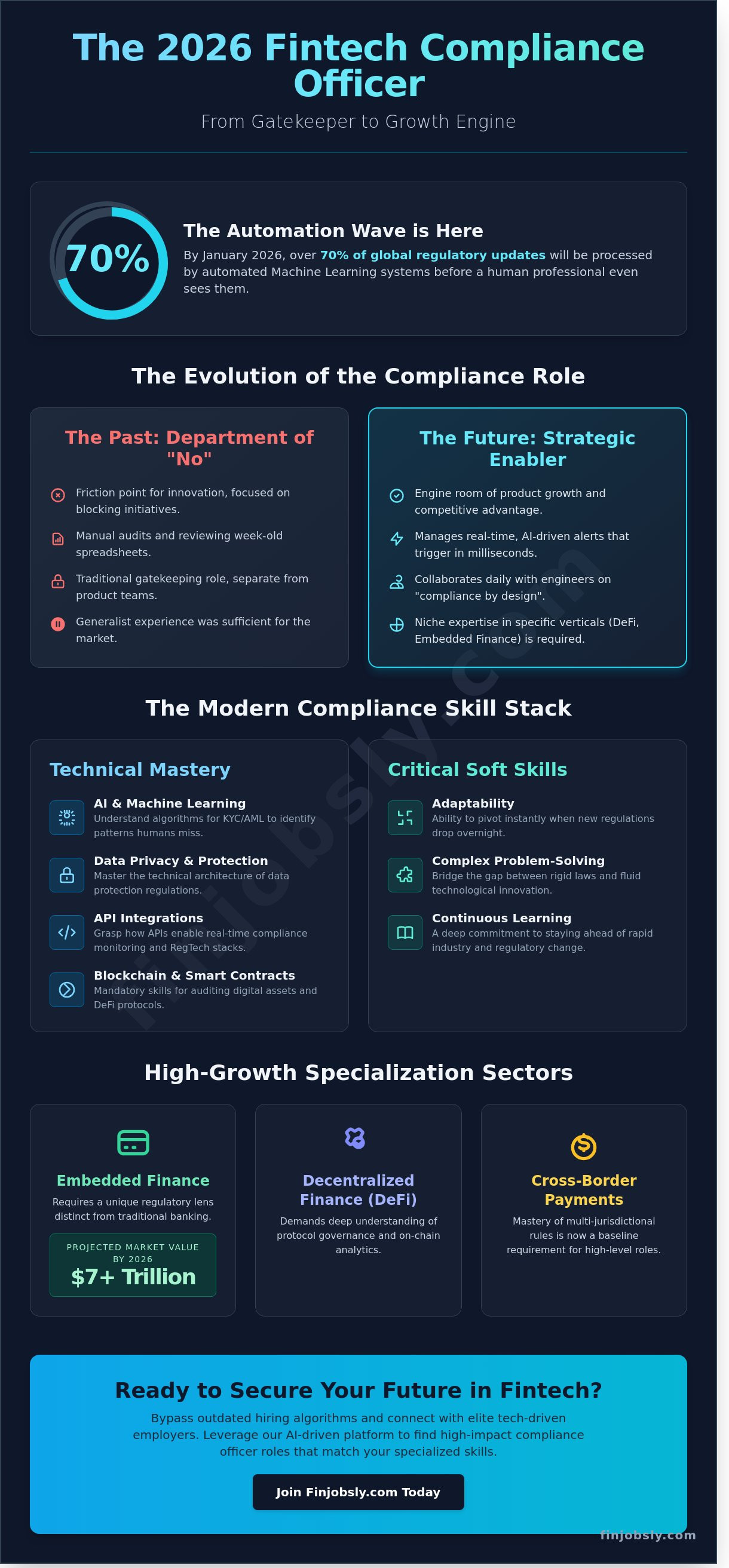
Did you know that by January 2026, over 70% of global regulatory updates will be processed by automated machine learning systems before a human professional even sees them? You likely feel the pressure of this shift as you sift through generic job boards that fail to recognize your specific expertise in blockchain or cross-border payments.
It’s frustrating to watch your specialized skills get buried under outdated hiring algorithms. This guide reveals how to leverage AI-driven career strategies to secure high-impact compliance officer fintech jobs that actually match your technical caliber and professional ambition.
Key Takeaways
- Master the 2026 Mandates: Transition from traditional banking roles to strategic leadership by mastering DORA (Digital Operational Resilience Act) and MiCA frameworks.
- Identify Critical Tech Skills: Secure high-impact fintech compliance roles by blending legal acumen with engineering-level technical literacy.
- Analyze High-Growth Sectors: Stay ahead of the curve in specialized sectors like Neobanking, DeFi, and RegTech.
- Optimize Your Visibility: Implement advanced resume techniques to reach elite tech-driven employers on specialized platforms like Finjobsly.com.
The Shifting Role of Compliance Officers in the 2026 Fintech Ecosystem
By 2026, the archetype of the corporate watchdog has vanished. Modern compliance officer fintech jobs now function as the engine room of product growth rather than a friction point for innovation. Companies like Stripe and Adyen have already proven that compliance is a competitive advantage; by 2026, this is the global industry standard.
From "Department of No" to Strategic Enabler
Compliance leaders now sit in product roadmap meetings from the earliest design phases. They don't just identify blockers; they design the technical workarounds for Smart Contracts and Automated Ledgers to ensure "Compliance by Design." Software engineers and compliance officers collaborate daily to ensure that APIs interact seamlessly with multi-jurisdictional regulatory frameworks.
Why 2026 is the Year of the Specialized Professional
Generalist experience is losing its edge. The industry now craves experts in niche verticals:
- Embedded Finance: A sector projected to reach $7 trillion, requiring unique regulatory lenses.
- RegTech Stacks: Professionals who can manage AI-driven alerts that trigger in milliseconds, replacing manual audits.
- Cross-Border Payments: Mastering the friction points of instant global liquidity.
Essential Skills & Certifications for 2026
Traditional roles have evolved into high-tech hybrid positions. Beyond foundational credentials like ACAMS or ICA, the 2026 market demands:
- Technical Mastery: Understanding how AI/ML algorithms identify patterns in KYC (Know Your Customer) and AML (Anti-Money Laundering) protocols.
- DORA Compliance: Ensuring operational resilience in the face of systemic cyber threats.
- On-Chain Analytics: Essential for anyone working in DeFi or Digital Asset regulation.
Top 5 Fintech Sectors Hiring Compliance Officers Right Now
If you are looking to increase your salary and impact, these five sectors are currently seeing the highest growth in compliance officer fintech jobs:

Ready to find your next role? Don't let your niche expertise go unnoticed on generalist sites. Browse the latest Compliance Officer Fintech Jobs on Finjobsly.com and connect with employers who value your specific 2026 roadmap.
Navigating High-Growth Sectors: From Neobanks to Blockchain
The fintech ecosystem is no longer a monolith. By 2026, the industry has fractured into specialized verticals, each demanding a distinct set of regulatory skills. Traditional neobanking focuses on high-volume retail stability, while the crypto sector prioritizes rapid architectural adaptation. Choosing the right path requires an understanding of where these pressures intersect. You need to decide if you want to manage the established guardrails of digital banking or build the new foundations of decentralized finance. Identifying your niche now ensures your expertise remains indispensable as the market matures.
The Crypto and Blockchain Compliance Frontier
The implementation of the Markets in Crypto-Assets (MiCA) regulation across the European Union has transformed the hiring market. By 2026, virtual asset service providers are no longer operating in a gray area; they require experts who can manage the Travel Rule requirements. This ensures that sender and receiver data accompanies every transaction over 1,000 EUR. This shift has triggered a surge in demand for compliance officer fintech jobs that focus on on-chain analytics and forensic monitoring. Central Bank Digital Currencies (CBDCs) also offer a massive growth path. With 134 countries exploring digital currencies as of mid-2024, the infrastructure for these state-backed assets will be a primary hiring driver for the next decade.
Payments and Neobanking: Scaling Responsibly
Retail fintech has shifted its focus from rapid user acquisition to rigorous consumer protection. Neobanks now face the same scrutiny as Tier 1 institutions, particularly regarding anti-fraud protocols and operational resilience. The Digital Operational Resilience Act (DORA), which became fully enforceable in January 2025, dictates how these firms handle third-party risk. If you enjoy building scalable systems for millions of users, this is your sector. Buy Now, Pay Later (BNPL) platforms also present a unique challenge. Since the 2024 CFPB ruling classified BNPL as credit card providers, these firms need compliance leaders who can bridge the gap between flexible consumer credit and rigid lending laws. You can browse-jobs on our platform to see how these specific requirements vary across the payments landscape.
Insurtech is the dark horse of 2026. It combines the complexity of traditional insurance with the technical agility of fintech. Regulators are currently zeroing in on AI-driven underwriting, demanding transparency in how algorithms determine premiums. If your career goal involves high-level policy influence, Insurtech offers a rare chance to shape emerging laws. Cross-border transfer firms are also evolving as they finalize the ISO 20022 migration that concluded in late 2025. This global standard for financial messaging requires compliance officer fintech jobs to be filled by people who understand data-rich transaction monitoring. Align your career with the sector that matches your appetite for risk and your technical strengths. To find your next role, sign up to Finjobsly.com.
Strategic Job Hunting: How to Stand Out in a Specialized Market
Traditional recruitment methods fail in high-stakes sectors. Generalist job boards flood your inbox with irrelevant noise and bury your expertise under a mountain of generic resumes. Finding elite compliance officer fintech jobs in 2026 demands a surgical approach. You need to bypass the broken systems of the past and leverage tools built for the future of finance. Success requires a blend of technical precision and strategic visibility.
Optimizing for the AI Recruiter
Modern hiring relies on intelligent matching algorithms. You must speak the machine's language while proving your human value. Focus on high-impact keywords like MiCA II compliance, programmable money, and automated KYC workflows. Avoid keyword stuffing. Instead, integrate these terms into achievement-based bullets. A 2025 industry report showed that candidates who quantified their impact, such as reducing onboarding friction by 18% through API-driven verification, were 3x more likely to clear initial screenings. Read the AI for Recruiting in 2026: The Definitive Guide for Fintech Leaders to gain a competitive edge by seeing the process through the employer's eyes.
Networking and Personal Branding for Compliance Leaders
Visibility is currency. Passive job seekers wait for openings; leaders create them. Contribute to regulatory whitepapers or speak at major industry gatherings like London Fintech Week, scheduled for June 2026. Engaging in niche forums establishes you as a disruptor who understands the intersection of law and code. This proactive stance often reveals the hidden job market where approximately 70% of senior compliance roles are filled through direct referrals or specialized talent pools before they ever hit a public board.
The multi-stage fintech interview process is designed to test your agility. Prepare for technical assessments that simulate real-time regulatory crises and behavioral rounds that probe your ability to collaborate with engineering teams. Firms in the fintech ecosystem value professionals who can balance rigid legal requirements with the fluid needs of a scaling startup. Using niche platforms allows you to bypass the initial friction of generalist sites, putting your profile directly in front of hiring managers who speak your language.
Finjobsly eliminates recruitment inefficiencies by connecting specialized talent with firms that value technical precision. Stop wasting time on outdated platforms and start your search where the innovators live. If you are ready to accelerate your career in 2026, sign up to Finjobsly.com.
Powering Your Career with FinJobsly AI-Driven Platform
Finjobsly isn't just another job board; it's a specialized engine designed to dismantle the barriers between elite talent and high-growth startups. Finding the right compliance officer fintech jobs requires more than a simple keyword search. It demands a deep understanding of regulatory nuances and cultural fit. Our platform leverages intelligent matching to analyze your specific skill set against the precise needs of the most innovative firms in the industry. This creates a streamlined path to your next career milestone.
You gain immediate access to a verified, fintech-exclusive talent pool that prioritizes quality over quantity. This exclusivity ensures you aren't competing with thousands of generalist applicants. Instead, you're positioned as a specialist. Recruitment analytics tools within the platform empower you to understand your market value with absolute clarity. Data from the 2025 Global Compliance Salary Index indicates that specialized fintech roles now command a 15% premium over traditional banking positions. Finjobsly brings this data to your fingertips so you can negotiate with confidence.
Discovering unique roles becomes effortless through our personalized recommendation engine. The system learns your preferences and career goals, surfacing opportunities that align with your trajectory. It's about moving away from reactive searching and toward proactive career management. You'll see roles in emerging sectors like decentralized finance and sustainable fintech before they hit the mainstream market.
Why Intelligent Matching Beats Manual Searching
Traditional job boards are often a source of immense frustration for senior professionals. You spend hours filtering through irrelevant listings that don't recognize the difference between standard internal audit and high-velocity crypto-compliance. Our AI solves this by automatically filtering for specific sub-niches like MiCA implementation or ESG reporting frameworks. It understands the technical requirements of the 2026 regulatory landscape before you even hit search. You're invited to signup to experience a search process that actually respects your expertise and your time.
Fostering Collaboration in the Global Fintech Ecosystem
We believe technology should serve a human-centric mission. By connecting global talent with UK-based fintech leaders, we're building a more resilient financial future. The platform acts as a bridge for professionals who want to work at the bleeding edge of digital finance. Personalized recommendations ensure you discover unique roles that might never appear on public forums. The future of work in financial technology is decentralized and data-driven. It's time your career path reflected that reality. Secure your next role as a compliance officer fintech jobs specialist by joining a community that values precision and innovation.
sign up to Finjobsly.com
Own the Future of Fintech Regulation
The 2026 regulatory landscape demands a new breed of professional. Success requires a transition from traditional oversight to mastering blockchain forensics and real-time data governance. With the fintech sector projected to reach a 25 percent compound annual growth rate through 2026, your ability to navigate neobanking and crypto payments will define your trajectory. Static job boards can't keep pace with these technical shifts. Finding the best compliance officer fintech jobs requires a platform that understands the technical pulse of modern finance.
Finjobsly replaces outdated recruitment with AI-powered intelligent matching for specialized fintech roles. We provide exclusive access to high-growth startups in banking, crypto, and payments. You'll also gain an edge with advanced resume optimization tools tailored for the 2026 job market. It's time to stop searching and start matching with positions that value your technical expertise and specialized knowledge. Your next career breakthrough is waiting. Sign up to Finjobsly.com
Frequently Asked Questions
What is the average salary for a Fintech Compliance Officer in 2026?
A senior compliance officer in fintech can expect a median salary of $148,000 by 2026 based on current 4% annual growth projections. Entry-level roles start near $82,000 while Chief Compliance Officers often exceed $245,000 in major hubs like New York or London. These figures reflect the high demand for specialized talent capable of navigating complex cross-border regulations within the global fintech ecosystem.
Do I need a law degree to work in fintech compliance?
You don't need a Juris Doctor to secure most compliance officer fintech jobs, though it remains a valuable asset for legal counsel roles. Approximately 65% of fintech compliance professionals hold degrees in finance, criminal justice, or data science instead of law. Employers prioritize candidates who demonstrate deep technical knowledge of AML protocols and digital asset regulations over traditional legal credentials.
How is AI changing the daily tasks of a compliance officer?
AI now automates 40% of routine monitoring and transaction screening tasks, allowing you to focus on high-level risk strategy. You'll spend less time manually reviewing alerts and more time fine-tuning the machine learning algorithms that detect fraudulent patterns. This shift requires you to become a tech-savvy strategist who understands how to audit AI-driven decision-making processes for bias and accuracy.
What are the most in-demand compliance certifications for 2026?
The Certified Anti-Money Laundering Specialist (CAMS) and the Certified Fintech Compliance Professional (CFCP) are the top credentials for 2026. Industry data shows that 78% of hiring managers prioritize candidates with blockchain-specific certifications like the Chainalysis Reactor Certification. Holding these specialized designations proves you can handle the unique risks associated with decentralized finance and instant payment rails.
Can I move from traditional banking compliance to a fintech startup?
Transitioning from traditional banking to a fintech startup is highly achievable if you adapt to a faster, agile work culture. While 90% of regulatory principles remain the same, you must learn to apply them to automated, scalable technologies. Startups value your foundational knowledge of Basel III or MiFID II but they need you to implement these frameworks within a continuous deployment environment.
Which fintech sectors are hiring the most compliance professionals right now?
The crypto-asset service provider and embedded finance sectors are hiring the most compliance professionals as of late 2025. Following the implementation of the MiCA regulation in Europe, these firms increased their compliance headcount by 35% to meet new licensing requirements. Neobanks and cross-border payment processors also represent a large portion of active job listings looking for specialized talent.
How does FinJobsly help me find remote compliance roles?
Finjobsly uses intelligent matching to connect you with remote-first fintech firms that value your specific regulatory expertise. Our AI-powered platform filters through thousands of listings to identify roles that offer 100% remote work or flexible hybrid models. You'll receive personalized alerts from our AI assistant that highlight positions matching your salary expectations and technical skill set.
What should I include in a fintech compliance resume to pass AI screening?
Include specific technical keywords like RegTech, KYC automation, and Sanctions Screening to pass AI-driven resume optimization filters for compliance officer fintech jobs. Quantify your impact by stating you reduced false positives by 22% or managed a compliance budget of $1.5 million. Our platform helps you refine these details to ensure your profile stands out to tech-driven employers using automated tools.
sign up to Finjobsly.com.